
Last updated: September 24, 2026
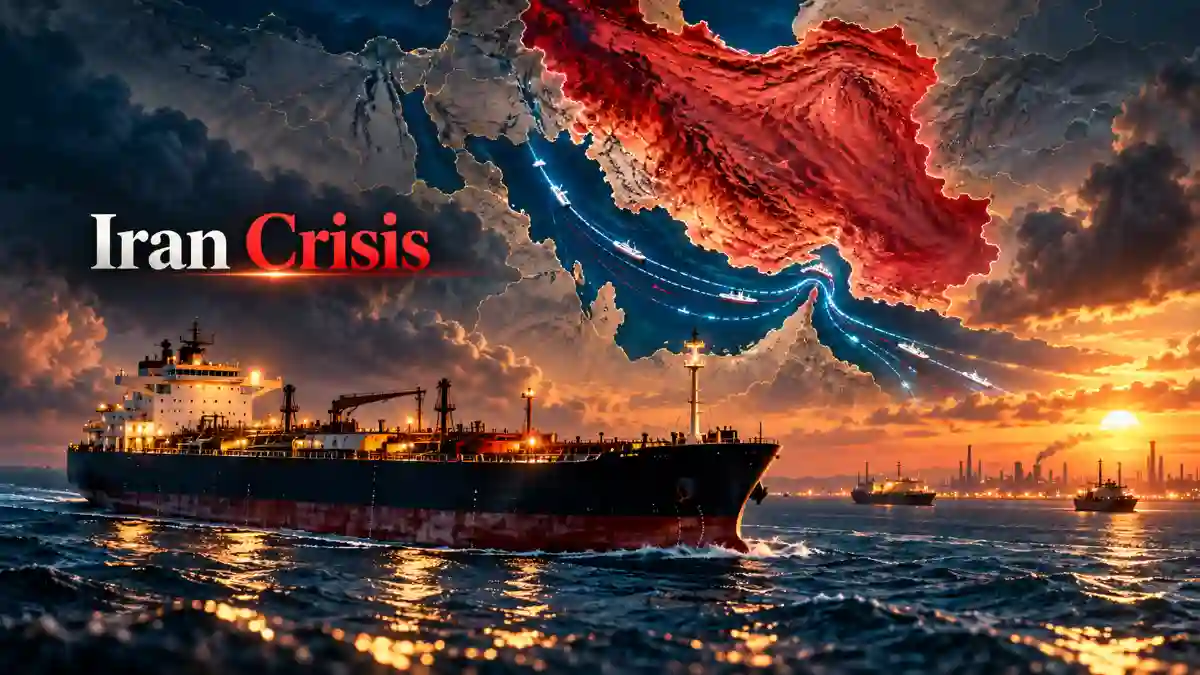
Iran attack news is not just one report or an incident. The steady conflict between the United States and Iran also has continued, with strikes on Iranian targets, retaliation against sites linked to the U.S. and attacks on commercial shipping around the Strait of Hormuz. Meanwhile, U.S. and Iranian officials have revived diplomatic contact ahead of the United Nations General Assembly in New York after holding faint hope for shoring up a ceasefire deal, but both sides are still far apart on key terms to end the infinite war.
For readers seeking to sort the most contentious headlines from the past few days, it is vital to distinguish between confirmed attacks and government claims of them; U.S. naval encounters that prompted no suspicion or military action beyond politics; Iranian maneuvers at sea without hostile intent.
Latest Situation at a Glance
| Many developments are confirmed, while some military claims remain contested.d | Latest verified picture |
| What is happening? | U.S.–Iran conflict continues alongside renewed diplomatic efforts |
| Latest major military pattern | Strikes, retaliation and repeated attacks involving commercial shipping |
| Strait of Hormuz | Traffic remains severely disrupted rather than operating normally |
| Recent ship attacks | Several incidents reported; responsibility has not been established in every case |
| Iran–U.S. talks | Contacts continue, but substantial disagreements remain |
| Main diplomatic issue | Ending hostilities and resolving restrictions around Hormuz |
| Information status | Many developments are confirmed, while some military claims remain contested.d |
Read More: Iran Attack
Reuters reported on September 23 that the United States and Iran remained far apart on how to end the war despite renewed diplomatic engagement. Meanwhile, preliminary shipping data showed only two commodity vessels crossing the Strait of Hormuz on one recent day, compared with a pre-conflict average of about 125 large commercial vessels per day.
Iran Attack Latest Updates
What Happened in the Latest Iran Attack?
The phrase “Iran attack” currently describes several different kinds of events, which makes context essential.
Recent developments have included U.S. attacks on Iranian military assets, Iranian retaliation against targets it associates with the United States, and attacks on commercial vessels in and around the Strait of Hormuz. Not every maritime incident has been conclusively attributed to Iran or the United States.
One of the largest recent escalations occurred on September 9, when Iran said it had attacked 10 ships near the Strait of Hormuz after the United States sank five Iranian oil tankers. Reuters described that exchange as the largest wave of attacks on shipping by the two sides since the conflict began. At least one seafarer was reported killed and another missing.
More recently, commercial ships continued to be hit in the strait. Reuters reported that an Isle of Man-flagged crude tanker and a Liberia-flagged LPG tanker were struck during separate incidents around September 21–22. The responsible party had not been identified in those cases.
That distinction matters: an attack occurring near Iran is not automatically an Iranian attack.
Where Did the Latest Attack Take Place?
Much of the recent military and maritime activity has been concentrated around:
- Iran and its coastal military infrastructure;
- the Persian Gulf;
- the Strait of Hormuz;
- the Gulf of Oman;
- U.S.-linked military locations elsewhere in the Gulf region;
- commercial shipping routes connecting Gulf energy exporters with world markets.
The Strait of Hormuz has become especially important because it connects the Persian Gulf with the Gulf of Oman and the Arabian Sea. Disruption there affects shipping far beyond the immediate battlefield.
Recent U.S.–Iran exchanges have also affected locations in Jordan, Bahrain, Kuwait and Iraq. During the renewed escalation in early September, Iran launched missile fire at what it described as U.S. assets in several of those countries following new U.S. attacks on Iran.
Were There Casualties or Damage?
Casualty figures vary considerably between incidents and can change after initial reports.
The September 9 attacks on shipping resulted in at least one reported seafarer death and one person missing. In subsequent incidents around September 21, two crew members aboard one tanker suffered minor injuries after their vessel was struck by an unidentified projectile.
Military and civilian casualty totals across the broader conflict are much larger, but they should not be combined casually into one number because different sources use different definitions, time periods, and verification standards.
When reading casualty reports, check whether the figure describes:
- confirmed deaths;
- government-reported deaths;
- civilian casualties;
- military casualties;
- injuries;
- missing personnel;
- crew members aboard commercial vessels.
Casualty figures should always be treated as time-sensitive during active conflict.
What Has Been Confirmed So Far?
The clearest way to understand breaking developments is to separate evidence by confidence level.
| Development | Evidence | Current status |
| U.S. and Iranian military strikes have occurred | Multiple established news reports and official statements | Confirmed |
| Commercial vessels have been attacked near Hormuz | Maritime authorities and shipping reports | Confirmed |
| Iran announced attacks on multiple vessels after U.S. tanker strikes | Iranian statement reported by Reuters | Claimed by Iran; some incidents independently documented |
| Every recent tanker attack was carried out by Iran | Insufficient evidence | Not established |
| U.S.–Iran diplomatic contacts are continuing | Officials and multiple news reports | Confirmed |
| The two sides have reached a peace agreement | No | Not confirmed |
| Hormuz has returned to normal traffic | Shipping data contradicts this | False as of latest reporting |
Read More: Iran Attack
This evidence-first approach is important because breaking-war coverage frequently combines independently verified events with claims made by participants in the conflict.
Iran Attack Timeline — How the Latest Events Unfolded
Events Leading Up to the Latest Attack
The current phase of conflict developed over several months rather than from a single recent strike.
CBS reported that the broader war began in late February with U.S.-Israeli attacks on Iran. Since then, the conflict has expanded to include Iranian retaliation, U.S. military operations, maritime blockades and repeated disruptions to commercial shipping.
The Strait of Hormuz gradually became one of the conflict’s central pressure points. Iran has sought conditions for reopening or normalizing traffic through the waterway, while the United States has imposed measures against Iranian ports and vessels.
Attack and Immediate Response
A major renewed escalation came in early September.
Reuters reported that the United States launched another wave of strikes on Iran on September 1–2. The U.S. military said it targeted air-defense systems, radars, maritime assets, mine-laying capabilities and communications infrastructure. Iran responded with missile fire at targets it described as U.S. assets around the Gulf region.
A second major escalation followed on September 9.
Iran said it attacked 10 ships near Hormuz after U.S. forces sank five Iranian oil tankers. The resulting exchanges disrupted shipping and pushed Brent crude above $100 per barrel at the time.
Iranian Retaliation and Military Developments
Iran has used multiple forms of retaliation during the conflict, including missile attacks and maritime actions it has publicly claimed.
However, readers should distinguish between:
Actions acknowledged by Iran: operations Tehran or Iranian military organizations publicly claim.
Actions attributed to Iran by another government: allegations that may require independent corroboration.
Unclaimed attacks: incidents in which responsibility remains unknown.
That distinction is particularly important around the Strait of Hormuz, where ships have been hit by drones, projectiles or other weapons without immediate proof identifying the attacker.
Latest Diplomatic Developments
The military conflict now runs in parallel with diplomacy.
On September 23, Reuters reported that U.S. and Iranian representatives remained far apart over how to end the war, despite renewed contacts around the U.N. General Assembly. Iranian President Masoud Pezeshkian said Iran would not surrender to U.S. pressure while continuing to support diplomacy.
| Period | Development | Why it matters |
| Late February 2026 | U.S.-Israeli attacks begin current conflict | Starting point of broader war |
| Early September | U.S. launches renewed attacks on Iran | Ends previous lull |
| Sept. 9 | Major exchange involving oil tankers and merchant shipping | Sharp maritime escalation |
| Sept. 21–22 | Additional ships struck near Hormuz | Shows continuing shipping risk |
| Sept. 22–23 | U.S.–Iran contacts intensify around UN meetings | Diplomatic path remains open |
| Sept. 23 | Officials say major disagreements remain | No comprehensive settlement yet |
Read More: Iran Attack
Who Is Involved in the Iran Conflict?
Iran
Iranian President Masoud Pezeshkian has represented Tehran diplomatically during the September U.N. meetings.
Iran’s armed forces and the Islamic Revolutionary Guard Corps, or IRGC, also play central military roles.
Iranian officials have publicly argued that negotiations must address the broader war, restrictions on Iranian shipping and ports, and conditions surrounding the Strait of Hormuz. Tehran has also warned that further U.S. attacks could lead it to expand its military response.
These are Iran’s publicly stated positions, not independent assessments of the justification for its actions.
United States
The United States is directly involved militarily in the conflict.
The U.S. has conducted strikes against Iranian military and maritime capabilities and imposed pressure on Iranian shipping. President Donald Trump has simultaneously discussed negotiations while threatening additional military action if an agreement is not reached.
During his September 22 address to the U.N. General Assembly, Trump again emphasized preventing Iran from obtaining nuclear weapons and called for greater economic pressure on Tehran.
Israel
Israel was involved in the strikes that helped initiate the current conflict and remains an important regional actor.
However, readers should avoid assuming that every U.S. operation is Israeli or every Israeli operation is jointly conducted with Washington. Military responsibility should be identified incident by incident.
Gulf States and Regional Mediators
Countries across the Gulf occupy several different roles.
Qatar and Pakistan have participated in mediation between Washington and Tehran.
Oman has also played an important diplomatic and maritime role.
Saudi Arabia, Bahrain, the United Arab Emirates, Jordan and Iraq are affected by military activity, energy disruption, regional basing arrangements or shipping insecurity.
Diplomatic roles can change quickly, so mediation claims should always be tied to a specific meeting or official announcement.
Has Iran Attacked Back?
Yes. Iran has carried out or publicly claimed retaliatory actions during the conflict, but individual incidents should still be evaluated separately.
Reported Iranian Missile and Drone Attacks
Following renewed U.S. strikes in early September, Iranian missile fire targeted what Tehran described as U.S. assets in Jordan, Bahrain, Kuwait and Iraq. Reuters reported the exchange as part of a widening return to open warfare after a previous lull.
Iran has also warned that further U.S. attacks could lead to strikes against energy infrastructure across the Gulf. Such statements describe potential future actions and should not be confused with attacks that have already occurred.
Maritime Attacks and Shipping Incidents
Shipping has become one of the conflict’s most visible fronts.
On September 9, Iran said it attacked 10 vessels after the United States sank five Iranian oil tankers. Other ships were struck in Iraqi waters and in the Strait of Hormuz during the same period.
Later attacks have been harder to attribute.
Reuters reported that two vessels were struck around September 21–22, including the LR Stephanie and the Al Maryah, but responsibility was not established.
What Is Confirmed vs What Iran or the U.S. Claims?
| Incident | Iranian account | U.S./other reporting | Evidence status |
| Early September retaliation | Iran described strikes on U.S. assets | Reuters documented missile exchanges | Attacks confirmed; details may differ |
| Sept. 9 shipping attacks | Iran said it attacked 10 ships | Multiple maritime incidents documented | Some events confirmed; individual attribution varies |
| Recent tanker strikes | No universal Iranian claim | Maritime agencies confirmed vessels were hit | Attacks confirmed, attacker not established |
| Future expansion of attacks | Iranian officials have warned of escalation | Reported by multiple outlets | Threat/statement, not completed action |
Read More: Iran Attack
Iran Attack Map — Where Is the Conflict Happening?
Iran and Nearby Conflict Zones
A useful mental map starts with Iran’s southern coast.
Immediately south lies the Persian Gulf. Ships exiting the Gulf must pass through the Strait of Hormuz, a narrow waterway between Iran and Oman, before entering the Gulf of Oman and then the Arabian Sea.
Nearby states include:
- Oman;
- United Arab Emirates;
- Qatar;
- Bahrain;
- Saudi Arabia;
- Iraq;
- Kuwait.
Farther west, developments involving Jordan, Israel and Yemen have also become connected to the broader regional conflict.
Key Military and Maritime Locations
The most important locations for understanding the current news are not individual tactical positions but major geographic areas:
Strait of Hormuz: central commercial shipping route.
Persian Gulf: contains major oil and LNG export infrastructure.
Gulf of Oman: connects Hormuz with wider international shipping lanes.
Red Sea and Bab el-Mandeb: an alternative strategic route that has also faced disruption involving Yemen’s Houthis.
For most readers, these geographic chokepoints matter more than the exact coordinates of individual military sites.
Why Is the Strait of Hormuz Important?
What Is the Strait of Hormuz?
The Strait of Hormuz is the narrow maritime passage connecting the Persian Gulf with the Gulf of Oman.
It matters because Gulf energy exporters rely heavily on the route to move oil, liquefied natural gas, and other cargo toward global markets.
When ships cannot move normally through Hormuz, the effect can extend well beyond Iran.
What Is Happening to Shipping?
Traffic has fallen dramatically.
Reuters reported that just two commodity vessels crossed the strait on one recent Monday, down from 10 the previous day. Before the conflict, the average was about 125 large commercial ships per day. Because some vessels may travel with tracking systems switched off, the visible count is not necessarily complete, but the decline is still substantial.
Over the previous weekend, Reuters counted 17 commodity-vessel crossings compared with 37 a week earlier.
Shipping companies are adapting through measures such as:
- rerouting;
- waiting for safer transit conditions;
- ship-to-ship oil transfers;
- higher-risk insurance;
- alternative export infrastructure.
Reuters has reported that ship-to-ship oil transfers around Oman increased substantially as producers tried to keep exports moving despite the disruption.
Why Does This Matter to the United States?
The effect on Americans is indirect but important.
The chain looks roughly like this:
shipping disruption → energy-supply uncertainty → oil-market volatility → higher transportation and logistics costs → possible effects on fuel and consumer prices
That does not mean every attack automatically raises gasoline prices.
Oil prices respond to many factors, including global supply, demand, inventories, alternative export routes and expectations about diplomacy.
Are the U.S. and Iran Holding Peace Talks?
Yes, diplomatic contacts are occurring, but there is no comprehensive peace settlement.
What Happened During the UN Meetings?
The September U.N. General Assembly created an opportunity for renewed communication.
Reuters reported on September 23 that contacts had resumed but that Tehran and Washington remained substantially divided over the terms necessary to end the conflict.
Trump has publicly said talks are continuing and has expressed optimism about settling. Iranian officials, meanwhile, have indicated willingness to negotiate while maintaining demands related to military pressure and shipping restrictions.
What Does Iran Say It Wants?
According to Iranian officials quoted in recent reporting, Tehran has linked progress to issues including:
- reducing U.S. military pressure;
- ending or easing restrictions on Iranian ports and vessels;
- broader terms for ending hostilities;
- reopening arrangements for the Strait of Hormuz.
Reuters reported that Iran indicated it could reopen Hormuz within about a week if the United States reduced military pressure and lifted its blockade on Iranian ports.
That represents Iran’s negotiating position rather than an agreed settlement.
What Does the United States Say It Wants?
The United States has emphasized:
- limits on Iran’s nuclear capabilities;
- freedom of navigation;
- security for shipping;
- broader settlement of the conflict.
Public presidential statements, formal negotiating demands, and media reports based on unnamed officials should be treated as separate categories rather than assumed to represent identical policy.
Who Is Mediating?
Regional states have helped keep communication channels open.
Reporting has identified Qatar and Pakistan among the intermediaries. Oman has also played an important role in negotiations and discussions over maritime arrangements.
| Issue | U.S. emphasis | Iranian emphasis | Current status |
| Ending hostilities | Negotiated settlement under U.S. conditions | End military pressure and war | Unresolved |
| Hormuz | Freedom of navigation | Conditional reopening | Unresolved |
| Iranian nuclear program | Restrictions remain central | Part of broader negotiations | Unresolved |
| Maritime pressure | Protect shipping and enforce U.S. measures | End U.S. blockade/pressure | Unresolved |
The table describes publicly reported positions; it does not determine which position is preferable.
Iran Attack — What Changed in the Last 24 Hours?
New Developments
As of September 24, the most important recent change is diplomatic rather than a newly confirmed large-scale battlefield escalation.
Iranian and U.S. representatives remain engaged through talks surrounding the U.N. General Assembly, but Reuters reported that the two sides still disagree substantially about the terms for ending the conflict.
Iranian President Masoud Pezeshkian also used his U.N. appearance to reject U.S. pressure while continuing to present diplomacy as a possible route forward.
What Has Not Changed?
Several major issues remain unresolved:
- there is no comprehensive peace agreement;
- the Strait of Hormuz has not returned to normal commercial traffic;
- maritime security remains poor;
- recent attacks on some ships remain unattributed;
- Washington and Tehran continue to disagree over the terms for de-escalation.
For returning readers, those unchanged facts are just as important as new statements.
Iran Attack — Confirmed Facts vs Claims
Confirmed Information
The following broad facts are well established:
- U.S. forces have conducted military attacks on Iran.
- Iran has retaliated during the conflict.
- Commercial vessels have been struck.
- Shipping through Hormuz has fallen drastically.
- The United States and Iran are engaged in diplomatic contacts.
- No comprehensive settlement has yet been announced.
Government and Military Claims
Government statements should be described as claims when independent verification is incomplete.
Examples include:
“Iran says it struck…”
“The U.S. military says it destroyed…”
“Iranian officials say their conditions require…”
Attribution is not just a writing style. It tells the reader what has actually been independently established.
Information That Remains Unverified
Some ship attacks remain unattributed.
Social-media footage may also circulate before its date, location, or subject can be verified.
A useful evidence hierarchy is:
| Claim | Best available evidence | Confidence |
| Vessel was physically struck | Maritime authority and crew reports | Confirmed |
| Exact weapon used | Physical evidence/official investigation required | Developing |
| Attacker’s identity | Requires attribution evidence | Sometimes unverified |
| Social post showing “today’s attack” | Must verify date and location | Unverified until checked |
Read More: Iran Attack
How to Verify Iran Attack Videos, Photos and Social Media Claims
Breaking conflicts produce misinformation quickly. A real video can be reposted with the wrong date, city, or description.
Step 1 — Check the Original Publication Date
Do not rely on the date of the post you saw.
Look for:
- earliest upload;
- original account;
- timestamps in credible news coverage;
- whether the same footage appeared months earlier.
Old military footage is frequently reused during new conflicts.
Step 2 — Find the Original Source
Ask who first published the material.
There is a major difference between:
- an official military account;
- a recognized news agency;
- a journalist at the scene;
- an eyewitness;
- an anonymous account.
An official source can still be partisan, but knowing the origin helps evaluate the claim.
Step 3 — Verify the Location
Look for identifiable features such as:
- buildings;
- signs;
- road layouts;
- mountain ranges;
- shorelines;
- known landmarks.
When professional verification teams use satellite imagery or geolocation techniques, look for the evidence they provide rather than simply accepting the conclusion.
Step 4 — Check Multiple Independent Sources
Ten accounts repeating one video do not equal 10 independent confirmations.
Look for sources that obtained information separately.
Step 5 — Separate Evidence From Captions
A video can be authentic while its caption is false.
For example, genuine footage of an explosion from June could be reposted in September with the claim that it shows a new attack.
The video is real; the description is not.
Verification Checklist
Before sharing a dramatic post, ask:
- Is the date confirmed?
- Is the location confirmed?
- Who posted it first?
- Has the footage appeared previously?
- Have independent outlets verified it?
- Does the caption make claims the image cannot prove?
- Are casualty figures sourced?
- Is the attacker independently identified?
- Is the weapon type actually confirmed?
If several answers are “no,” treat the post as unverified.
How the Iran Conflict Could Affect Americans
Gas and Oil Prices
The most direct economic link for many Americans is energy.
Brent crude moved above $100 per barrel during the major September 9 shipping escalation, according to Reuters. Prices have also fallen at times when markets perceived improved chances of diplomacy, showing how sensitive oil markets are to both military and political developments.
That means the relationship is not:
attack = automatic fixed increase in gas prices.
Instead, energy prices respond to:
- actual supply losses;
- expected future disruptions;
- shipping capacity;
- alternative routes;
- OPEC production;
- refinery conditions;
- U.S. inventories;
- diplomatic developments.
Flights and Travel
Regional conflict can cause:
- airspace closures;
- rerouted flights;
- longer journey times;
- cancellations;
- sudden security restrictions.
Americans traveling in or through the region should check current information from the U.S. State Department, the relevant U.S. embassy, their airline, and local authorities.
Conditions vary significantly between countries, so describing the entire Middle East as uniformly “safe” or “unsafe” is not useful.
Americans in the Middle East
Anyone already in the region should prioritize official alerts.
Useful steps include:
- Check the latest State Department advisory for the specific country.
- Review local U.S. embassy security messages.
- Confirm your flight before traveling to the airport.
- Know an alternative route if airspace changes.
- Keep travel documents and essential medication accessible.
- Follow local emergency instructions.
Shipping and Consumer Costs
Even consumers far from the Middle East can feel secondary effects if disruptions continue.
Potential channels include:
- marine insurance;
- tanker freight rates;
- airline fuel costs;
- shipping delays;
- industrial transport;
- imported goods.
Reuters has reported sharply higher oil-transport costs during the conflict, reflecting how difficult and expensive alternative shipping arrangements can become.
What Developments Should Readers Watch Next?
The useful question is not “who will win?” but which indicators would show that the conflict is escalating or de-escalating.
Further U.S.–Iran Negotiations
Watch for:
- formally announced direct or indirect talks;
- statements from mediators;
- written proposals;
- ceasefire terms;
- shipping agreements.
Talks themselves do not mean an agreement has been reached.
Strait of Hormuz Shipping Conditions
Commercial traffic provides one of the clearest indicators of regional risk.
Important signs include:
- increased vessel crossings;
- fewer attacks;
- reduced insurance costs;
- cancellation of restrictions;
- official reopening agreements.
Additional Military Actions
Watch for independently confirmed:
- new U.S. strikes;
- Iranian retaliation;
- attacks on ships;
- changes in regional deployments;
- ceasefire announcements.
Avoid treating threats as completed military actions.
UN and International Diplomatic Activity
The United Nations remains one diplomatic venue.
France has also been working on a possible U.N. Security Council initiative aimed at protecting freedom of navigation through the Strait of Hormuz, according to Reuters.
Other actors to watch include:
- Qatar;
- Oman;
- Pakistan;
- European governments;
- the International Atomic Energy Agency.
Iran Attack Background — How Did the Current Conflict Reach This Point?
The Immediate Trigger
The current conflict dates to late February 2026, when U.S.-Israeli attacks on Iran initiated the present phase of open warfare, according to contemporary reporting.
Subsequent months brought repeated cycles of:
strikes → retaliation → temporary diplomatic efforts → maritime pressure → renewed escalation
Understanding that cycle is more useful than treating every new explosion as an unrelated incident.
Major Escalation Points
Key stages include:
- Late February: current war begins.
- Following months: military exchanges and attempts at negotiation.
- Summer: Hormuz becomes increasingly central to negotiations and economic pressure.
- Early September: renewed U.S. attacks trigger Iranian retaliation.
- September 9: major wave of attacks against oil and commercial shipping.
- September 21–22: new vessel incidents and extremely low Hormuz traffic.
- September 22–23: diplomatic engagement intensifies around the U.N.
Why the Strait of Hormuz Became Central
Hormuz gives the conflict an economic dimension.
The strategic sequence is straightforward:
military conflict → pressure on shipping → reduced energy flows → higher economic costs → maritime access becomes negotiating leverage
That is why discussions about the war repeatedly return to Hormuz even when the latest military incident occurs elsewhere.
Key Entities to Know
| Entity | Role |
| Iran | One of the principal states in the conflict |
| United States | Direct military and diplomatic participant |
| Masoud Pezeshkian | President of Iran |
| Donald Trump | President of the United States |
| IRGC | Major Iranian military organization |
| U.S. military | Conducts U.S. military operations |
| Strait of Hormuz | Strategic international shipping passage |
| Qatar | Regional mediator in some talks |
| Oman | Diplomatic and maritime interlocutor |
| Pakistan | Has participated in mediation |
| United Nations | Venue for current diplomatic activity |
| Israel | Major regional military actor involved in the conflict’s opening phase |
Read More: Iran Attack
Sources and Update Methodology
This story changes quickly. A responsible article should therefore prioritize evidence over speed.
Information should be checked against:
- official documents and statements;
- international organizations;
- established wire services;
- reputable news organizations;
- recognized maritime-security authorities;
- independently verified imagery.
How We Handle Conflicting Reports
When credible sources disagree, the disagreement should remain visible.
For example:
Incorrect approach:
“Iran destroyed the target.”
Better approach:
“Iran said it destroyed the target; independent confirmation was not immediately available.”
Likewise, a U.S. military assessment should be attributed to the U.S. military until independently corroborated.
How Corrections Are Handled
A developing-news article should maintain:
Published: September 24, 2026
Last updated: September 24, 2026
Correction history: Add any substantive corrections with time and explanation.
Readers should be able to tell whether the information they are seeing is hours old or several days old.
Iran Attack: What Readers Should Know Now
The Iran attack story is best understood as an ongoing U.S.–Iran conflict involving conventional military strikes, retaliation, economic pressure and increasingly dangerous maritime activity. Recent attacks on commercial vessels are confirmed, but responsibility for every incident has not been established. Shipping through the Strait of Hormuz remains severely disrupted, while U.S. and Iranian officials continue diplomatic contacts without a comprehensive settlement.
For readers following the story, the most useful next step is to check the article’s last-updated timestamp and distinguish confirmed events from government claims and unverified social-media reports. Travelers should rely on current official government embassy and airline guidance rather than older news posts.
Frequently Asked Questions
Latest Iran attack: Where is it?
Instead of one big strike, the current story consists of multiple developments. Examples from 2019 include the U.S.–Iran military exchanges and attacks on commercial vessels in the vicinity of the Strait of Hormuz. There have been some recent attacks on ships — though not necessarily attributable in every case.
Who attacked Iran?
US carried out confirmed strikes on Iranian military and maritime targets during this ongoing conflict. When the war began, Israel also carried out some of its own strikes. Not all incidents reported online were carried out by the same perpetrator (or perpetrator group), and individual instances should still be punched into a database for verification.
Did the U.S. Attack Iran?
Iran has in turn targeted what it calls U.S. assets during the hostilities. In early September, Iranian missile fire hits U.S.-aligned holdings in multiple Gulf-region countries after renewed U.S. strikes. Confirming the specifics and extent of damaged vehicles should be done on a case-by-case basis.
Has Iran attacked Israel?
Iran and Israel have traded strikes as part of the wider Middle East conflict. Articles are dated up to October 2023, and because attacks happen at different times with different weapons (missiles, drones or linked regional actors), readers need to check the date of an individual report instead of assuming older video shows a new attack.
How did Iran respond to the latest attack?
Iran has responded several times during the fighting, announcing interventions in several operations. However, Iran hasn’t been blamed for every maritime attack in recent months. This is also why any verified retaliation ought to be disaggregated from allegations of attacks that do not identify a culprit.
The Strait of Hormuz: Closed or No Way?
A more appropriate description is that, rather than a total closure every single moment, commercial traffic remains deeply disrupted. On a recent day, only two commodity-vessel crossings were reported by Reuters compared with some 125 large commercial vessels per day before the conflict, although some traffic may go undetected in regular tracking datasets.
Why is the Strait of Hormuz important in the Iran conflict
Hormuz links the Persian Gulf with the Gulf of Oman and is one of the main arteries of energy being exported. Disruptions to oil and LNG transportation, shipping costs, marine insurance, and international energy markets.
US AND IRAN IN PEACE TALKS REAL TIME UPDATES
Diplomatic contacts — including a round of discussions related to the September U.N. General Assembly. The first round ended with the sides still far apart on key terms, according to a Sept. 23 Reuters report.
GASOLINE prices in the U.S. are not expected to be directly impacted by the Iran conflict anytime soon.
Yes, but not in a mere one-to-one relationship. Disruption in the vicinity of Hormuz affects global oil prices, tanker financing and supply forecasts. American gasoline prices are determined not only by the cost of raw materials but also domestic inventories, refining capacity, global demand and a host of other factors.
How do I know that an Iran attack video is real?
Verify the source and location of the video, when it was uploaded. Look for previous occurrences, juxtapose credible third-party reports, and ask if the caption overstates what the footage demonstrates. The 9/11 footage may still be misrepresented as a new assault, even though it is an authentic video.