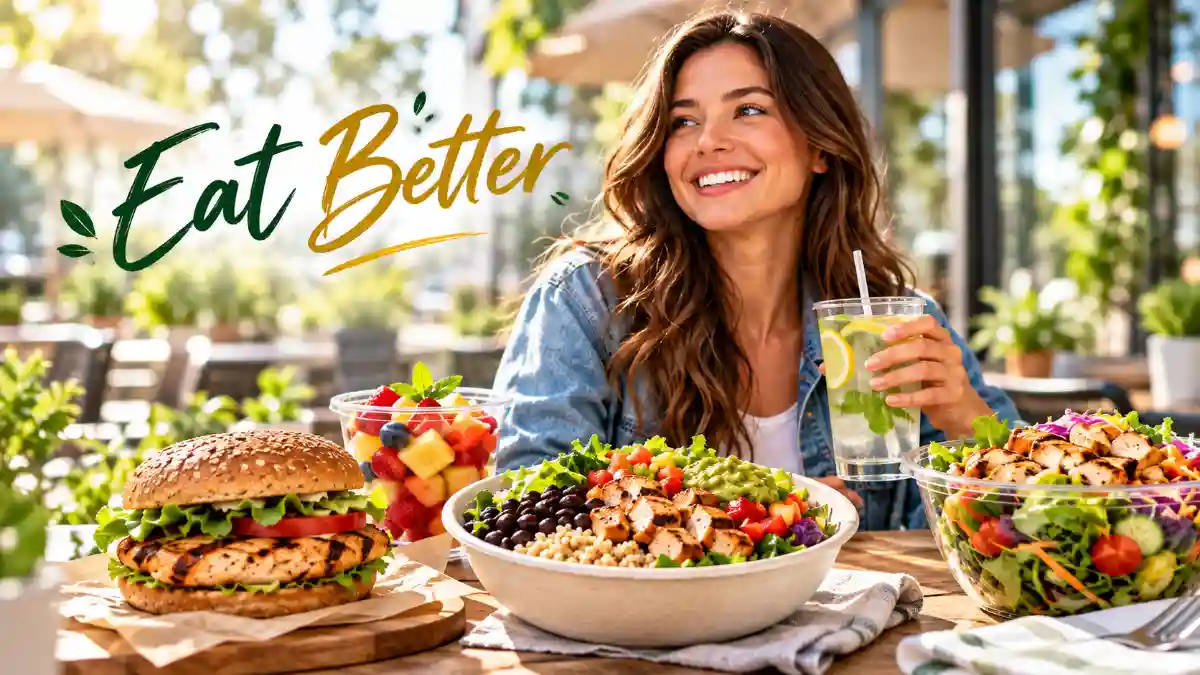

Healthy fast food is less about finding one magically “healthy” menu item and more about assembling a meal that fits with your own dietary regimen. A good order typically makes a meaningful protein source combined with some fruit, vegetables, beans or whole grains while controlling portion size, sodium, saturated fat, added sugar and sauces and drinks.
The FDA notes that matters because Americans get one in three of their calories from food or drinks consumed away from home.
This guide offers brief meal inspirations, goal-oriented options, better swaps, and a straightforward ordering structure you can implement in fast joint around the nation.
What Counts as Healthy Fast Food?
There is no single meal that qualifies as the healthiest choice for everyone. Your calorie needs, activity level, dietary preferences, medical needs, appetite, and what you eat during the rest of the day all matter.
The current Dietary Guidelines for Americans, 2025–2030 emphasize diets centered on nutrient-dense foods such as protein foods, vegetables, fruits, healthy fats, dairy, and whole grains, while recommending less reliance on highly processed foods, added sugars, excess sodium, and refined carbohydrates.
For fast food, the practical takeaway is simple: judge the entire meal, not the marketing label attached to one ingredient.
Look Beyond Calories
Calories are useful, but they should not be the only number you check.
Consider these two hypothetical lunches:
Meal A: 300 calories, little protein, almost no vegetables, and little fiber.
Meal B: 420 calories with grilled chicken, beans, vegetables, and salsa.
Meal A has fewer calories, but Meal B may provide substantially more protein, fiber, and food volume. Depending on the person’s goal, that additional nutrition may make the second meal more useful and satisfying.
When comparing orders, look at several factors together:
| Nutrition factor | Why it matters | Common fast-food sources |
| Protein | Helps build a more substantial meal | Chicken, eggs, beef, beans, tofu |
| Fiber | Supports digestive health and helps meals feel more substantial | Beans, vegetables, fruit, whole grains |
| Sodium | Restaurant meals can contain large amounts | Sauces, cheese, processed meats |
| Saturated fat | Worth considering across your overall diet | Cheese, fatty meats, creamy sauces |
| Added sugar | Can climb quickly without adding much food | Soda, shakes, desserts, sweet coffee |
| Portion size | Directly changes the amount eaten | Fries, bowls, pizza, drinks |
Read More: Healthy Fast Food
Think About the Whole Meal
A sandwich may look perfectly reasonable by itself. Add a large order of fries, multiple dipping sauces, a large soda, and dessert, and the nutritional profile becomes very different.
Use this rule:
Entrée + side + sauce + beverage = the actual meal.
The FDA similarly advises consumers to consider sides, beverages, sauces, portion sizes, and cooking methods when using restaurant calorie information.
Healthy Fast Food Quick-Choice Guide
If you are already standing at the counter or sitting in the drive-thru, start with your main goal.
| Your goal | Prioritize | Useful meal format | Watch for |
| Fewer calories | Moderate portion + protein | Grilled sandwich | Sauces and large sides |
| More protein | Protein-forward entrée | Chicken or protein bowl | Sodium |
| More fiber | Beans + vegetables | Burrito or grain bowl | Oversized portions |
| Lower sodium | Simpler meal | Basic entrée + fresh side | Sauces and cheese |
| Vegetarian | Beans/tofu + vegetables | Bowl, tacos, or salad | Too little protein |
| Lower carb | Protein + non-starchy vegetables | Salad or customizable bowl | Sweet dressings |
| Balanced breakfast | Protein + fruit or whole grain | Egg-based meal | Sweet coffee |
| Budget-friendly | Filling basic ingredients | Beans, eggs, basic sandwiches | Premium add-ons |
Read More: Healthy Fast Food
Instead of asking, “What is the healthiest thing here?” ask:
“Which meal best matches what I need right now?”
25 Healthy Fast Food Choices to Healthy Fast Food
Exact menus vary by restaurant and location, so think of these as meal formats rather than a permanent ranking.
Twenty-five practical choices include:
- Grilled chicken sandwich with vegetables
- Grilled chicken sandwich with fruit instead of fries
- Grilled chicken nuggets with a fresh side
- Chicken-and-vegetable bowl
- Chicken, bean, and salsa bowl
- Bean-based burrito bowl
- Two tacos with beans or lean protein
- Taco salad with dressing controlled
- Basic hamburger with vegetable toppings
- Single cheeseburger rather than a double
- Turkey or chicken sandwich loaded with vegetables
- Half sandwich paired with soup
- Broth-based soup with a side salad
- Salad topped with grilled chicken
- Salad with beans or another plant protein
- Egg-and-English-muffin breakfast sandwich
- Egg bites with fruit
- Oatmeal with nuts and fruit
- Lower-sugar yogurt with fruit
- Fruit cup alongside a protein-based entrée
- Rice-and-bean bowl with extra vegetables
- Tofu-and-vegetable bowl where available
- Thin-crust vegetable pizza with a sensible number of slices
- Small entrée paired with a produce-based side
- Protein-focused bowl customized to control sauces, cheese, and portions
Here is how to evaluate some of those formats in practice.
Grilled Chicken Sandwiches
A grilled chicken sandwich can provide substantial protein without the breading and frying used for crispy chicken.
For example, Chick-fil-A currently lists its Grilled Chicken Sandwich at 390 calories, 28 grams of protein, 3 grams of fiber, 2.5 grams of saturated fat, and 765 mg of sodium. The restaurant notes that nutrition can vary with customization and location.
That does not make it universally “healthy,” but it provides a useful comparison point. Sauce, cheese, bacon, fries, and drinks can change the final meal substantially.
Chicken and Vegetable Bowls
Customizable bowls are useful because you can control nearly every component.
A practical combination might include:
- chicken;
- a moderate rice portion;
- black or pinto beans;
- fajita vegetables;
- tomato salsa;
- lettuce.
Chipotle currently lists protein-focused combinations containing chicken, rice, beans, vegetables, salsa, and lettuce, illustrating how bowls can be assembled around protein, fiber-rich ingredients, and produce.
The main advantage is customization. The main danger is assuming that anything served in a bowl is automatically light.
Bean-Based Burrito Bowls
Beans can contribute protein and fiber while making a bowl more filling.
Start with beans and vegetables, then decide how much rice, cheese, sour cream, guacamole, queso, and tortilla you actually want.
You do not have to eliminate calorie-dense ingredients. Simply treat them as deliberate additions rather than automatic ones.
Egg-Based Breakfast Sandwiches
An egg sandwich can be a convenient breakfast because it packages protein and carbohydrates into a manageable portion.
When possible, compare:
- sandwich size;
- cheese quantity;
- bacon or sausage;
- bread type;
- sodium;
- side options.
Adding fruit can be more useful than automatically turning the sandwich into a hash-brown-and-sweet-drink combo.
Salads With Lean Protein
A salad becomes a more complete meal when it contains a meaningful protein source.
Useful additions include grilled chicken, beans, eggs, tofu, or other lean proteins.
Pay attention to the extras. Crispy chicken, bacon, cheese, croutons, tortilla strips, nuts, creamy dressing, and large dressing packets can transform the meal.
Simple Burgers
You do not necessarily need to avoid burgers.
A single-patty burger with lettuce, tomato, onions, and pickles can be easier to fit into a balanced meal than a double or triple burger with bacon, extra cheese, oversized fries, and a sugary drink.
The better comparison is often simple versus loaded, not “burger versus no burger.”
Soups and Sandwich Combinations
Half-sandwich-and-soup combinations can help with portion control, especially at café-style chains.
Check sodium carefully. Soups, deli meats, cheese, bread, and condiments can all contribute sodium even when the meal appears relatively light.
Tacos With Beans or Lean Protein
Two simple tacos can offer more portion control than a large burrito loaded with every topping.
Build around:
- chicken or beans;
- lettuce;
- tomato;
- salsa;
- other vegetables.
Then choose cheese, sour cream, guacamole, and sauces according to your goals.
Fruit, Yogurt, and Oatmeal Options
These foods can work well for breakfast or as sides, but their names do not tell you the full story.
Check:
- added sweeteners;
- flavored yogurt;
- granola portions;
- dried fruit;
- syrups;
- serving size.
For comparison, Chick-fil-A currently lists its medium Fruit Cup at 70 calories with 2 grams of fiber and no sodium.
Menu items and formulations change, so check the restaurant’s official U.S. nutrition information before relying on a specific number.
Best Healthy Fast Food Choices by Nutrition Goal
Different goals require different decisions. A meal that works well for someone prioritizing protein may not be ideal for someone whose main concern is sodium.
High-Protein Fast Food
Look first for:
- grilled chicken;
- lean meat;
- eggs;
- beans;
- Greek yogurt;
- tofu;
- customizable protein bowls.
A useful comparison tool is protein efficiency:
Protein efficiency = grams of protein ÷ calories × 100
For example, a 400-calorie meal containing 32 grams of protein provides 8 grams of protein per 100 calories.
This is not a health score. It simply helps someone prioritizing protein compare two options.
For example, Chick-fil-A’s current 390-calorie Grilled Chicken Sandwich contains 28 grams of protein, or roughly 7.2 grams of protein per 100 calories.
Lower-Calorie Fast Food
Reducing calories does not require ordering the smallest food item available.
Instead, preserve useful components:
- a protein source;
- vegetables or fruit;
- enough volume to make the meal satisfying.
Then look at the easiest calorie reductions: oversized portions, large fries, sugary beverages, heavy sauces, extra cheese, and unnecessary add-ons.
High-Fiber Fast Food
Fast-food meals tend to become more fiber-friendly when they include:
- beans;
- vegetables;
- whole grains;
- fruit;
- lentils where available.
A burrito bowl with beans, vegetables, salsa, and lettuce generally creates more opportunity for fiber than a plain meat-and-cheese sandwich.
Lower-Sodium Fast Food
Lower-sodium ordering can be challenging because sodium is used throughout restaurant preparation.
Do not assume grilled or low-calorie means low-sodium.
For example, Chick-fil-A’s Grilled Chicken Sandwich contains 765 mg sodium, while its current regular Chicken Sandwich contains 1,460 mg.
Ways to reduce sodium may include:
- smaller portions;
- fewer sauces;
- less cheese;
- skipping bacon and other cured meats;
- avoiding multiple salty sides;
- checking the restaurant’s official nutrition calculator.
People who have been given a specific sodium target by a healthcare professional should use that personalized target rather than a generic rule.
Vegetarian Fast Food
Simply removing the meat does not guarantee a satisfying meal.
Build around protein-containing ingredients such as:
- beans;
- tofu;
- eggs;
- yogurt;
- cheese in appropriate portions.
A useful vegetarian bowl might combine beans, rice, vegetables, lettuce, salsa, and a deliberate amount of cheese or guacamole.
Lower-Carb Fast Food
If lower carbohydrate intake is your goal, consider:
- salads with protein;
- lettuce-wrapped sandwiches where offered;
- protein-and-vegetable bowls;
- smaller rice portions.
Remember that lower carb and healthier are not synonyms. Sodium, saturated fat, vegetables, fiber, total calories, and overall dietary pattern still matter.
Healthy Fast Food Breakfast Options
Fast-food breakfast can range from a simple egg sandwich to a pastry, sweetened coffee, hash browns, and juice that together function more like a large meal.
Egg-Based Breakfasts
Look for combinations that include eggs with a manageable bread portion and, where available, fruit.
You can often make a breakfast order simpler by avoiding the automatic addition of:
- extra cheese;
- multiple breakfast meats;
- hash browns;
- sugary drinks.
Oatmeal
Oatmeal can provide whole grains, but toppings make a difference.
Check whether your order includes:
- sweetened dried fruit;
- brown sugar;
- syrups;
- large quantities of granola;
- nuts.
Nuts add calories but also provide nutrients, so the goal is not necessarily to remove them. The goal is to understand the total meal.
Yogurt and Fruit
Yogurt plus fruit can be convenient, especially when the yogurt provides meaningful protein.
Compare plain or less-sweet options with parfaits containing large amounts of sweetened yogurt, granola, syrup, or other sugary toppings.
Coffee Drinks Can Become Part of the Meal
Do not treat a large specialty coffee as nutritionally invisible.
Syrup, sweetened milk, whipped cream, cold foam, and larger cup sizes can add considerable calories and sugar.
If breakfast already includes a sandwich, oatmeal, or yogurt, decide whether you want your drink to function as another substantial part of the meal.
| Breakfast option | What to prioritize | Watch for | Easy modification |
| Egg sandwich | Protein, portion | Processed meats, cheese | Keep toppings simple |
| Oatmeal | Whole grains, fruit | Syrups, sugar | Use fewer sweet toppings |
| Yogurt | Protein | Sweetened granola | Control toppings |
| Coffee | Beverage preference | Syrups, whipped toppings | Order less-sweet |
Read More: Healthy Fast Food
The 30-Second Healthy Fast Food Ordering Method
You do not need to memorize hundreds of menu items.
Use this seven-step method instead.
Step 1 — Choose a Protein Source
Start with the ingredient that will anchor your meal:
- grilled chicken;
- eggs;
- beans;
- tofu;
- lean beef;
- yogurt.
Once the protein is chosen, build around it.
Step 2 — Add Vegetables or Fruit
Next, ask what produce is available.
That might mean:
- lettuce;
- tomato;
- onions;
- fajita vegetables;
- salsa;
- side salad;
- apple slices;
- fruit cup.
Even one simple addition improves the composition of an otherwise basic meal.
Step 3 — Check the Portion
Fast food frequently offers several sizes.
Ask whether you actually need:
- two patties instead of one;
- large fries instead of small;
- three or four pizza slices instead of two;
- a giant burrito instead of a smaller bowl.
The FDA specifically notes that calorie information can help diners decide how much to eat now and whether to save part of a larger entrée for later.
Step 4 — Look at How It Is Cooked
Words such as grilled, baked, roasted, steamed, or broiled often indicate different preparation methods from breaded, battered, or deep-fried foods.
The FDA recommends using menu information to compare these choices rather than relying on the food’s name alone.
Fried food does not have to be banned. If you want it, account for it deliberately.
Step 5 — Review Sauces and Toppings
Before ordering, check:
- cheese;
- mayo;
- ranch;
- creamy dressings;
- sour cream;
- dipping sauces.
Ordering sauce or dressing on the side lets you control the amount you actually use.
Step 6 — Check Sodium
Sodium is one of the easiest numbers to overlook.
A meal can be relatively modest in calories but still contain substantial sodium.
Use the restaurant’s official nutrition page whenever sodium is important to your diet.
Step 7 — Choose the Beverage Deliberately
The simplest beverage options include:
- water;
- sparkling water;
- unsweetened tea;
- other unsweetened or lower-sugar drinks.
If you want a regular soda or sweet coffee, that can still be a deliberate choice. The point is to count it as part of the meal.
Remember the sequence: Protein → Produce → Portion → Preparation → Sauce → Sodium → Drink.
How Small Swaps Can Improve a Fast-Food Meal
A better order often requires only one or two adjustments.
| Typical choice | Possible swap | Main change |
| Crispy chicken | Grilled chicken | Less breading/frying |
| Large fries | Small fries or fruit | Smaller portion |
| Soda | Water or unsweetened drink | Less added sugar |
| Creamy dressing poured on | Dressing on the side | Portion control |
| Double burger | Single burger | Smaller portion |
| Oversized burrito | Customizable bowl | Easier portion control |
| Extra cheese | Regular or no cheese | Less saturated fat/sodium |
| Chips and queso | Produce-based side if available | Different nutrient mix |
Read More: Healthy Fast Food
Notice that none of these swaps says you can never eat fries, cheese, or crispy chicken.
The goal is to decide which part of the meal matters most to you.
Healthy-Sounding Fast Food That Isn’t Automatically a Better Choice
Words such as salad, wrap, smoothie, protein, and plant-based can create a health halo.
Check the actual meal before deciding.
Salads
A salad with vegetables and grilled protein can be a useful meal.
But adding crispy chicken, bacon, several ounces of cheese, croutons, fried tortilla strips, and a full packet of creamy dressing can dramatically change it.
Check the complete nutrition information when possible.
Wraps
A wrap is not automatically lighter than a sandwich.
A large flour tortilla can be substantial, and the final result depends on everything inside it.
Compare:
- tortilla size;
- protein;
- vegetables;
- cheese;
- sauces;
- overall portion.
Smoothies
Smoothies can contain fruit, but they may also include:
- sweetened juice;
- concentrates;
- syrups;
- sweetened yogurt;
- large serving sizes.
The word “smoothie” alone tells you very little about added sugar or total calories.
Plant-Based Burgers
Plant-based describes the primary protein source. It does not automatically mean low-calorie, low-sodium, high-fiber, or nutritionally superior.
Look at the same information you would check for any burger:
- calories;
- protein;
- fiber;
- saturated fat;
- sodium;
- toppings;
- sides.
Yogurt and Granola Bowls
A yogurt bowl can be nutrient-dense, but large amounts of sweetened granola, honey, syrup, and flavored yogurt can increase sugar and total calories quickly.
Check serving sizes instead of assuming every yogurt bowl is equivalent.
“Protein” Menu Items
High protein can be useful, but it does not erase everything else about the meal.
For example, Chipotle currently advertises a Double High Protein Burrito with 79 grams of protein and 840 calories. That may appeal to someone specifically seeking a large, protein-heavy meal, but its protein label does not automatically make it the appropriate portion for every diner.
Consider protein alongside calories, fiber, sodium, saturated fat, and total portion.
How to Read a Fast-Food Nutrition Menu
Large U.S. chains make this easier than many people realize.
FDA menu-labeling rules apply to restaurants and similar food establishments that operate under the same name with 20 or more locations and sell substantially the same standard menu items. Covered establishments must display calories for standard menu items and make additional written nutrition information available, including saturated fat, sodium, carbohydrates, sugars, fiber, and protein.
Start With Serving Size and Calories
Make sure the nutrition information refers to the amount you intend to eat.
A nutrition number becomes less useful if:
- you order two servings;
- add several toppings;
- increase the size;
- add sides without counting them.
Check Protein and Fiber
If two meals have similar calories, protein and fiber can help you understand how their composition differs.
A bean-and-chicken bowl, for example, may have more protein and fiber than a similarly caloric snack-style meal.
Review Sodium and Saturated Fat
These values are particularly useful when comparing items that look similar.
Do not assume:
- grilled = low sodium;
- vegetarian = low sodium;
- salad = low saturated fat;
- low calorie = nutritionally balanced.
Check Added Sugar Where Available
Pay special attention to:
- sodas;
- shakes;
- desserts;
- breakfast foods;
- flavored yogurt;
- specialty coffee;
- sauces.
Use Official Restaurant Apps and Nutrition Calculators
For the most reliable menu-specific information, start with the restaurant itself.
Useful resources include official nutrition information from chains such as:
- McDonald’s;
- Chipotle;
- Taco Bell;
- Chick-fil-A;
- Panera Bread;
- Starbucks.
The FDA requires covered chains to make more than calorie information available, so you can compare protein, sodium, fiber, sugars, and other nutrients before ordering.
Whole Meal vs. Entrée: The Comparison Most Lists Miss
One of the biggest mistakes in healthy-fast-food lists is evaluating only the entrée.
Imagine this simplified scenario:
| Order | Entrée | Side | Drink | Sauce | What changes |
| Basic order | Grilled sandwich | None | Water | None | Simple baseline |
| Combo meal | Same sandwich | Large fries | Soda | Dipping sauce | More calories, sodium, sugar |
| Modified meal | Same sandwich | Fruit | Water | Light/on-side sauce | Different overall profile |
Read More: Healthy Fast Food
A real example shows why sides matter.
Chick-fil-A currently lists its Grilled Chicken Sandwich at 390 calories and its medium Fruit Cup at 70 calories. Combined, that is 460 calories before any sauce or beverage.
A different side and drink would produce a different meal even though the entrée stayed the same.
That is why restaurant comparisons should evaluate orders, not isolated sandwiches.
Healthy Fast Food on a Budget
A practical meal has to fit your wallet as well as your nutrition goals.
Build Around Low-Cost Protein Staples
Budget-friendly restaurant foods often include:
- beans;
- eggs;
- simple burgers;
- basic chicken items.
Instead of starting with a premium entrée, look at whether a basic option plus a useful side provides what you need.
Avoid Expensive Add-Ons That Don’t Improve the Meal Much
Costs can rise through:
- double meat;
- premium toppings;
- extra cheese;
- extra sauces;
- combo upgrades;
- specialty drinks.
Ask yourself whether the upgrade improves the meal enough to justify the price.
Compare Nutrition per Dollar Carefully
If budget is your main concern, you can calculate:
Protein grams per $1 spent
For instance, if a $5 item provides 25 grams of protein:
25 ÷ 5 = 5 grams of protein per dollar.
This is a budget metric, not a health score. It ignores fiber, vegetables, sodium, saturated fat, micronutrients, and other important factors.
Prices also vary significantly by location, delivery platform, franchise, and promotion. Never treat one restaurant’s local price as a nationwide standard.
Common Healthy Fast Food Mistakes
Small mistakes often matter more than choosing the “wrong” restaurant.
Choosing Only by Calories
Calories answer one question: how much energy the food provides.
They do not tell you how much protein, fiber, sodium, added sugar, or produce a meal contains.
Compare the whole nutrition profile.
Ignoring Sodium
Sodium can be high in sandwiches, sauces, cheese, cured meats, breaded chicken, soups, and bowls.
This is especially important for people who have received specific sodium guidance from a healthcare professional.
Forgetting the Drink
A beverage can quietly become a substantial part of the order.
Count soda, shakes, sweet tea, flavored coffee, and similar drinks as part of the meal instead of treating them as free additions.
Treating Salad as Automatically Healthy
Judge the finished salad.
Protein, dressing, cheese, crispy toppings, bacon, nuts, and serving size all matter.
Turning a Bowl Into Two Meals’ Worth of Food
Customization is useful—but it can also encourage you to add everything.
A bowl containing rice, beans, double meat, queso, cheese, sour cream, guacamole, and chips may be much larger than the meal you originally intended.
Start with the foundation you actually want, then add toppings selectively.
Using Outdated Nutrition Lists
Restaurant menus change.
Portions, recipes, sauces, ingredients, product names, and nutrition numbers can all be updated.
For that reason, this article uses current official sources for specific examples, but you should still check the restaurant’s current nutrition information when placing your order.
Unique Information Competitors Commonly Miss
A useful healthy-fast-food guide should do more than rank sandwiches by calories.
Goal-Based Recommendations Instead of One “Healthiest” Ranking
There is no meaningful universal winner.
A meal that performs well for protein may contain more sodium. A vegetarian meal may contain plenty of fiber but less protein. A lower-calorie choice may not be the most satisfying.
Start with your goal.
Whole-Meal Nutrition Instead of Entrée-Only Numbers
Always consider:
entrée + side + sauce + drink.
Otherwise, the comparison does not reflect what you actually consume.
Protein Efficiency
Protein per 100 calories can be useful when protein is your primary goal.
It should remain one comparison tool rather than a universal score.
Price and Nutrition Together
A meal that looks ideal nutritionally but costs too much for someone to buy regularly may not be the most practical recommendation.
Price belongs in real-world food guidance.
Nutrition Data Verification Dates
Restaurant articles should tell readers when menu data was checked.
A simple editorial line such as:
Nutrition data checked: September 2026
helps readers understand whether figures are likely to reflect current menus.
A Reusable Ordering Method
Restaurant lists become outdated.
The seven-step system remains useful:
Protein → Produce → Portion → Preparation → Sauce → Sodium → Drink
Use it anywhere.
Healthy Fast Food Checklist
Before placing your next order, ask:
- Does the meal contain a meaningful protein source?
- Can I add vegetables or fruit?
- Is the portion appropriate for what I need?
- Would grilled, roasted, or baked work better for my goal than fried?
- Are sauces and toppings adding substantial calories or sodium?
- Have I checked sodium if it matters to me?
- Am I choosing my drink deliberately?
- Am I evaluating the entire meal rather than only the entrée?
You do not need to answer “perfectly” to every question. The checklist is a decision aid, not a test.
How Often Can Fast Food Fit Into a Healthy Diet?
There is no single frequency that is appropriate for every person.
How fast food fits into your diet depends on:
- your overall eating pattern;
- calorie and nutrient needs;
- what you order;
- portion sizes;
- activity level;
- dietary preferences;
- medical considerations.
Someone ordering a chicken-and-bean bowl with vegetables and water is having a very different meal from someone ordering a large fried combo, soda, and dessert—even though both technically ate fast food.
The Dietary Guidelines for Americans emphasize the overall dietary pattern and nutrient-dense food choices rather than defining health through one individual meal.
So instead of asking whether fast food is “good” or “bad,” ask:
How does this order fit into the rest of what I eat?
Frequently Asked Questions About Healthy Fast Food
What is the healthiest fast food to eat?
No one “best” health-forward fast food for everybody. An appropriate meal is typically served in the combination of protein and vegetables, fruit, beans or whole grains and contains appropriate amounts of sodium, saturated fat, sauces and added sugar for your diet. Depending on who we’re talking about, both a grilled chicken bowl and bean (based whatever) bowl can be a fit.
Which fast food has a lot of protein?
Some of the most common higher-protein options include grilled chicken, lean meat, eggs, beans, Greek yogurt, tofu and protein-packed bowls. Don quant comparison of product in terms of protein as well as calorie, sodium, fiber and portion; o choose one by just focusing on protein.
Since that time, the two have grown closer together and become better friends?
Things like grilled chicken sandwiches, plain tacos, salads with grilled protein Beefless burgers or smaller burger sizes Broth-based soups and fruit sides Customizable bowl options Think about sauces, fried sides, sugary drinks and large portions because they can substantially alter the meal.
So, let me help you?
If the eating pattern overall meets the person’s calorie and nutrition needs, fast food can fit into a weight-management plan. Portion size, the choice of drink, how many sides you can get with your meal (if any in some cases), is protein included (and vegetables)? How often should one eat? There is no perfect one-size-fits-all when it comes to weight management, so those having medical or nutritional concerns should seek professional support.
What is the best fast food breakfast?
There is no single winner, but realistic breakfast selections tend to be sandwiches made with eggs; oatmeal; yogurt with fruit and other meals that blend protein or whole grains plus some type of fruit. Be cautious of some specialty coffee, syrups and oversized portions, as well as sodium-filled breakfast meats.
Is grilled chicken always healthier than fried chicken?
Not necessarily. In grilling, we strip away the breading and frying that appear in many crispy products.The sodium sauces portion sides and toppings still count. You are a data guide so compare the entire nutrition and not only the method of cooking.
Are fast-food salads actually healthy?
If they have vegetables and a good protein source, they can be quite filling. But crispy chicken, bacon, cheese, croutons, fried toppings and a creamy dressing could easily influence the end dish by great measure. Do not evaluate the word “salad,” judge the salad.
What is the healthiest drink to get with fast food?
You can choose water, which is a straightforward option since it has no calories and no sugar at all. You could have unflavored tea and/or sparkling water too. That doesn’t mean you can never opt for another beverage; just treat sweetened drinks like a part of the meal.
008 In October 2020, you completed a course about avoiding fast food?
Opt for simple meals, compare sodium data from official sources, manage sauces & cheese, reduce cured meats and salty toppings, and consider smaller sizes. Then, if you are under the care of an MD or other health professional wherein sodium prescription has been given, heed that advice.
Nutrition information for healthy fast food chains?
Obtain information from the restaurant’s website, app, nutrition PDF or online meal calculator. Covered chains with 20 or more locations are required to post calories for standard menu items and be sure that other written nutrition information—such as sodium, saturated fat, fiber, sugars and protein—is available in the U.S.