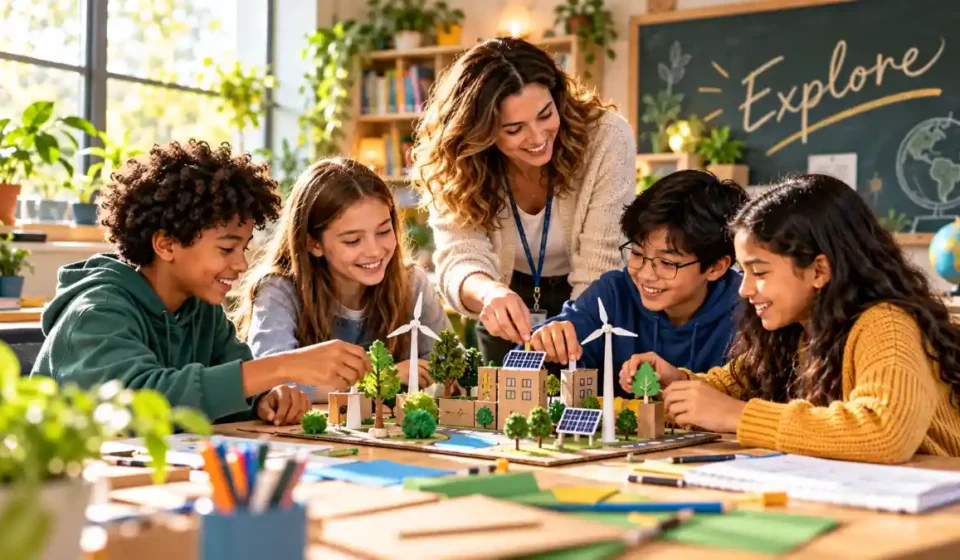

Classroom events turn everyday learning experiences into lasting memories that allow students to try out their ideas, problem-solve, practice new skills, and collaborate. Whether it’s a science competition, a classroom marketplace, a reading celebration, or a student showcase, the right event can make learning more interactive while keeping costs low and prep time short.
Every concept isn’t going to be effective in each type of classroom. For example, a 5th grade math challenge would require an entirely different format than either a high school debate or a kindergarten story time.
This resource includes 30 classroom activities that are both engaging and educational. It also provides estimated time to prepare each activity, the estimated cost of each activity, grade level suggestions, instructional guidance on how to plan the activity, and practical tips on how to make activities inclusive.
Quick Guide: Find the Right Event for Your Classroom
| Your classroom needs | Recommended event |
| Quick lesson review | Trivia Tournament |
| No extra budget | Storytelling Circle |
| Math and money practice | Classroom Market Day |
| Hands-on science | STEM Rescue Challenge |
| Critical thinking | Mock Trial |
| Reading engagement | Reading Café |
| Team collaboration | Collaborative Design Challenge |
| Large class | Art Gallery Walk |
| Student creativity | Mini Makers’ Fair |
| End-of-year celebration | Memory Event |
What Are Classroom Events?
Classroom events provide an opportunity for students to experience educationally and socially relevant activities in groups of two or more, which have a common goal. Classroom events may provide support for learning in the classroom, celebrate successes, build relationships, and promote student creativity and collaboration.
They can take from fifteen minutes to a complete class session, or even require multiple days to prepare.
Examples could include a spelling competition, a science demonstration day, a classroom art exhibition, a mock election, or a reading celebration.
The defining characteristics include an organized event structure with a purpose, intention to participate, and an impactful result.
Classroom Events vs. Everyday Classroom Activities
The everyday activities are usually a portion of your normal instructional procedures. A special format, theme, challenge, or shared result is typically associated with events.
In other words, doing five math problems in class is just an average day in school. But when you create a Math Challenge Day that includes problem-solving stations, team roles, and time for students to reflect on their learning experience, you turn a regular day of practicing math into an organized event.
Both formats have advantages. Consistent practice helps develop habits. Events offer new opportunities to utilize what you’ve learned.
Why Classroom Events Matter for Students
Well-designed events give students opportunities to practice what they know in different situations.
A classroom market can connect arithmetic to purchasing decisions. A mock trial can encourage evidence-based reasoning. A group engineering challenge can require students to explain and revise their ideas.
Educational research supports practices such as active retrieval and connecting abstract concepts with concrete examples, although that doesn’t mean every classroom game improves achievement. The Institute of Education Sciences’ instructional practice guide provides relevant evidence-based recommendations.
Events can also support communication, shared responsibility, and a sense of belonging in the classroom when students have meaningful ways to participate.
How to Choose the Best Classroom Event
Before selecting an event, consider what students need to learn, how much time you have, and what resources are available.
Match the Event to a Learning Goal
Begin with one clear objective.
If students need to recall science vocabulary, use a trivia tournament. If they need to explain historical arguments, choose a debate or mock trial. If the goal is stronger cooperation, select a challenge requiring shared decisions.
Avoid selecting an event based only on how exciting it looks.
Consider Grade Level and Student Abilities
Kindergarten students usually benefit from shorter instructions, concrete materials, and frequent guidance.
Middle school students may enjoy challenges that combine teamwork and independent thinking. High school students can often manage research, evidence-based discussion, and more complex responsibilities.
These are starting points, not rigid age limits. Adapt the complexity to the students in front of you.
Estimate Time, Budget, and Preparation
Separate three different requirements: time spent preparing, time spent running the event, and time needed for cleanup.
A 30-minute challenge might require another 20 minutes of preparation. Account for printing, consumable supplies, classroom furniture, and technology.
The estimated costs below assume approximately 25–30 students, common classroom supplies already available, and no paid outside services.
Choose a Format That Fits Your Class Size
Smaller classes may work together as one group. Larger classes often benefit from stations or teams of four to six students.
Assigning roles such as recorder, timekeeper, materials organizer, and presenter can help distribute responsibilities.
Classroom Event Quick-Selection Guide
| Event | Grades | Duration | Prep time | Extra cost |
| Trivia Tournament | 3–12 | 20–30 min | 10–20 min | $0 |
| Storytelling Circle | K–5 | 15–25 min | 5–10 min | $0 |
| STEM Challenge | 3–8 | 35–50 min | 20–30 min | 0–15 |
| Classroom Market | 3–8 | 45–60 min | 30–60 min | 0–10 |
| Mock Trial | 7–12 | 45–60 min | 30–60 min | $0 |
| Art Gallery Walk | K–12 | 20–40 min | 10–20 min | 0–10 |
These are illustrative planning estimates, not fixed requirements or national cost averages.
30 Fun Classroom Event Ideas for Students
The following ideas are grouped by learning purpose so teachers can choose activities that fit their curriculum rather than scrolling through unrelated games.
Interactive Games and Review Events
1. Classroom Game Show
Grades 3–12 · 30–40 minutes · Free · Low–medium prep
Turn a completed unit into a friendly game show using questions at different difficulty levels.
Divide students into teams, display a question, allow individual thinking time, and then invite team responses. Rotate spokespersons so participation doesn’t depend on the fastest student.
For example, a fifth-grade science game might have categories for ecosystems, food chains, and adaptations.
End by reviewing incorrect answers. The learning value comes from recalling and explaining content, not simply earning points.
2. Trivia Tournament
Grades 3–12 · 20–30 minutes · Free · Low prep
Prepare three short rounds of curriculum-based questions. Students first answer independently, then discuss with teammates before submitting a group response.
Award points for correct explanations or useful reasoning, not only speed.
This format works particularly well before history, geography, and science assessments.
3. Classroom Escape Challenge
Grades 4–10 · 30–45 minutes · 0–10 · Medium prep
Create four or five connected puzzles. Each solved puzzle reveals a clue needed to complete the next task.
For a math unit, students might solve fractions, interpret a graph, and calculate measurements to uncover a final code.
Use envelopes, printed clues, or slides. Students do not need to be physically locked in a room.
Provide hints at scheduled intervals, and make sure groups can finish without excessive frustration.
4. Vocabulary Championship
Grades 2–10 · 20–30 minutes · Free · Low prep
Create rounds involving definitions, synonyms, examples, pictures, and sentences.
Instead of asking students to memorize words, encourage them to apply vocabulary meaningfully.
A science round could ask students to explain evaporation with a simple real-world example. Allow written responses as an alternative to speaking.
5. Puzzle Challenge Day
Grades 3–12 · 25–40 minutes · Free–$5 · Low prep
Set up stations with logic puzzles, number patterns, word problems, and visual reasoning tasks.
Students rotate through stations and record their reasoning.
Offer different difficulty levels and reward thoughtful approaches rather than speed alone.
Science, Math, and STEM Events
6. Classroom Market Day
Grades 3–8 · 45–60 minutes · 0–10 · High prep
A classroom market helps students practice arithmetic, budgeting, communication, and introductory economic concepts.
Materials: Pretend money, price labels, paper signs, calculators if appropriate, and reusable classroom objects.
How to organize it:
- Divide students into small groups representing shops.
- Ask each shop to create a short price list.
- Give every student an equal pretend budget.
- Let students take turns being buyers and sellers.
- Ask them to calculate totals, change, and remaining balances.
- Review transactions and discuss purchasing decisions.
For older students, introduce discounts, sales tax using an explicitly chosen sample rate, or profit calculations.
Common mistake: Spending most of the lesson decorating shops rather than practicing math.
Inclusive adaptation: Use seated sales stations, large-print price cards, and partner calculations.
7. Science Investigation Day
Grades 3–8 · 35–50 minutes · 0–15 · Medium prep
Students investigate a testable question using age-appropriate materials.
For example, groups can compare which paper-towel samples absorb the most water, while keeping the amount of water and testing procedure consistent.
Have students predict results, record observations, and explain their conclusions.
Choose safe materials, review spill precautions, and follow school laboratory safety rules. Avoid tasting substances or combining unknown chemicals.
8. STEM Rescue Challenge
Grades 3–8 · 35–50 minutes · 0–15 · Medium prep
Present students with a fictional engineering problem: build a bridge that carries a small load or construct a protective structure for a model object.
Provide limited supplies such as paper, tape, cardboard, and craft sticks.
Teams sketch a design, build a prototype, test it safely, and explain one improvement.
Evaluate the reasoning and revision process, not just which structure performs best.
9. Math Challenge Day
Grades 2–8 · 30–45 minutes · Free · Low prep
Create stations for estimation, number patterns, measurement, and multi-step word problems.
For example, one station might ask students to estimate the number of paper clips needed to measure a desk, then test their estimate.
Offer extension questions so early finishers continue learning without being pushed into speed-based competition.
10. Mini Makers’ Fair
Grades 4–12 · 45–60 minutes for presentation · 0–20 · High prep
Students design and display a useful object, model, or invention using approved materials.
Projects could include a cardboard phone stand, water-saving concept model, or simple organizational tool.
Visitors ask about the problem, design choices, limitations, and possible improvements.
The fair itself can fit within one class period, but projects may require multiple preparation lessons.
Reading, Writing, and Language Events
11. Book Character Day
Grades 2–8 · 30–45 minutes · Free · Medium prep
Students choose a character from an assigned or independently selected book.
They prepare a short introduction covering the character’s motivation, important decisions, and development.
Costumes should be optional. Students can use drawings, written profiles, or character cards instead.
Ask questions based on textual evidence to strengthen comprehension.
12. Reading Café
Grades K–8 · 25–40 minutes · Free–$5 · Low prep
Arrange comfortable reading areas or stations with different reading tasks.
One station might encourage independent reading, another partner recommendations, and another short written reflections.
Students can create book recommendation cards for classmates.
The café theme need not involve food or beverages, avoiding unnecessary costs and allergy concerns.
13. Storytelling Circle
Grades K–5 · 15–25 minutes · Free · Low prep
Begin with a simple opening, such as “One morning, the classroom discovered a mysterious box.”
Each student adds a sentence or idea, building a shared story.
Use illustrated prompts for younger children. Students can contribute by speaking, drawing, or choosing between suggested story developments.
Close by asking students to identify the beginning, middle, and end.
14. Classroom Newsroom
Grades 5–12 · 40–60 minutes · Free · Medium prep
Divide students into reporting teams and assign school-safe topics.
Students gather information, check sources, write short reports, and create headlines.
A school garden update or coverage of a student project can work well.
Teach the difference between facts and opinions. Follow school privacy rules and obtain appropriate permission before publishing identifiable student information.
15. Peer Teaching Day
Grades 4–12 · 30–45 minutes · Free · Medium prep
Assign small groups a concept they have already studied.
Each group prepares a three- to five-minute explanation and a quick practice question.
For example, one group could explain equivalent fractions while another demonstrates how to compare them.
The teacher should check explanations for accuracy before students present.
History, Culture, and Social Studies Events
16. Historical Character Day
Grades 4–10 · 35–50 minutes · Free · Medium prep
Students research a historical figure and present a short, evidence-based profile.
They should identify the person’s historical context, contributions, and relevant controversies where age-appropriate.
Instead of relying on costumes or dramatic impersonation, allow posters, interviews based on documented evidence, and timelines.
17. Mock Trial
Grades 7–12 · 45–60 minutes · Free · High prep
Select a fictional case or an appropriate historical controversy.
Assign roles such as attorneys, witnesses, jurors, and evidence organizers.
Provide a shared packet containing facts and questions. Students prepare arguments and evaluate how strongly the evidence supports each position.
Avoid cases involving students’ real personal disputes.
18. Cultural Discovery Day
Grades 3–12 · 40–60 minutes · Free–$10 · Medium prep
Students investigate cultural history through literature, geography, architecture, art, or carefully selected primary sources.
For example, groups could study how architecture reflects climate in different regions.
Use accurate sources and avoid treating any culture as a single tradition or asking students to speak on behalf of their identities.
19. Classroom Debate Day
Grades 6–12 · 30–45 minutes · Free · Low prep
Choose a question that permits reasoned disagreement, such as whether schools should offer more project-based assessments.
Give students time to research, develop arguments, and prepare respectful responses.
Assign discussion roles and allow written submissions for students who cannot or prefer not to speak publicly.
Evaluate evidence and listening skills rather than personal opinions.
20. Career Exploration Day
Grades 6–12 · 40–60 minutes · Free · Medium prep
Students research different occupations, daily responsibilities, training pathways, and useful skills.
They create career profiles and share their findings through posters or short presentations.
Encourage them to investigate multiple education and training routes, including apprenticeships, community college, technical programs, and four-year degrees.
Creative and Collaborative Classroom Events
21. Art Gallery Walk
Grades K–12 · 20–40 minutes · 0–10 · Low prep
Display student artwork or subject-based visual projects around the room.
Students visit each display and leave constructive feedback using prompts such as “I noticed…” and “I wonder…”
For larger classes, rotate small groups. Seated or digital viewing can reduce unnecessary movement.
22. Student Talent Showcase
Grades K–12 · 40–60 minutes · Free · Medium prep
Invite students to demonstrate skills in music, writing, art, storytelling, coding, or another school-appropriate area.
Participation should not require performing on stage.
Students may exhibit completed work, submit recordings under school policy, or share a written explanation.
Keep presentation times equal and avoid ranking students by popularity.
23. Classroom Olympics
Grades 2–8 · 30–50 minutes · Free–$10 · Medium prep
Organize a series of safe academic and teamwork challenges.
Events might include a word puzzle relay, a memory challenge, an estimation round, or a collaborative drawing task.
Use cooperative scoring and allow students to choose roles that match their abilities.
Avoid activities requiring unsafe physical competition or creating barriers for students with disabilities.
24. Collaborative Design Challenge
Grades 4–12 · 35–50 minutes · 0–10 · Medium prep
Give teams a practical problem, such as designing a more organized classroom supply station.
Groups sketch ideas, discuss constraints, build a simple prototype when feasible, and explain trade-offs.
Require every member to contribute to the planning or presentation process.
25. Classroom Scavenger Hunt
Grades K–8 · 20–30 minutes · Free–$5 · Low prep
Hide or display clues connected to a current lesson.
A geography version could ask students to locate map symbols, identify cardinal directions, or match locations to descriptions.
Keep clues within clearly defined areas and provide a paper-based search sheet for students who need a seated alternative.
Community-Building and Celebration Events
26. Student Showcase Day
Grades K–12 · 40–60 minutes · Free · Medium prep
Allow students to share completed projects or explain something they recently learned.
Create display stations and invite peers to ask respectful questions.
Students can present individually or in groups. Give quieter students the option to use written explanations.
27. Classroom Kindness Challenge
Grades K–8 · 20–30 minutes · Free · Low prep
Organize challenges focused on encouragement, listening, and cooperation.
For example, groups might practice giving specific, constructive feedback or brainstorming ways to welcome a new student.
Avoid public kindness rankings, which can turn thoughtful behavior into a popularity contest.
28. Mystery Investigation Day
Grades 4–10 · 30–45 minutes · Free–$5 · Medium prep
Create a fictional mystery supported by written clues, timelines, and witness statements.
Students compare evidence, eliminate unsupported explanations, and present their reasoning.
Use nonthreatening scenarios, such as identifying which fictional inventor misplaced a blueprint.
29. Reflection Gallery
Grades 3–12 · 20–35 minutes · Free · Low prep
Ask students to select work showing improvement or something they are proud of learning.
They display the work alongside a brief reflection about what changed and what they want to practice next.
Allow private reflections where students prefer not to publicly share personal challenges.
30. End-of-Year Memory Event
Grades K–12 · 40–60 minutes · Free–$10 · Medium prep
Create a classroom timeline of memorable lessons, completed projects, and shared achievements.
Students may contribute drawings, short reflections, or learning highlights.
Keep the celebration focused on everyone’s growth. Avoid awards that embarrass students or compare their personal circumstances.
Best Classroom Events by Grade Level
Choosing an activity that matches students’ developmental needs can make participation smoother and reduce unnecessary frustration.
Preschool and Kindergarten Events
Younger children benefit from visual instructions, familiar materials, and short participation periods.
Good choices include Storytelling Circle, simple Art Gallery Walks, picture scavenger hunts, and supervised discovery stations.
Break activities into manageable steps, model each task, and provide opportunities for children to respond through drawing, pointing, movement, or speech.
Elementary School Events (Grades 1–5)
Elementary students can participate in increasingly structured games and collaborative projects.
Classroom Market Day, Book Character Day, Trivia Tournament, and Scavenger Hunts offer opportunities to practice subject knowledge and communication.
For younger elementary students, simplify arithmetic or reading requirements. Older students can handle more independent decisions and complex instructions.
Middle School Events (Grades 6–8)
Middle school students may benefit from events that offer responsibility, creative problem-solving, and meaningful choices.
Consider STEM Rescue Challenges, Classroom Newsroom, student debates, and collaborative design projects.
Let students plan parts of the activity, but provide clear expectations, roles, and deadlines.
High School Events (Grades 9–12)
High school activities can involve detailed research, argumentation, real-world problem-solving, and student-led presentations.
Mock Trials, Career Exploration Day, Mini Makers’ Fair, and research-based debates are suitable starting points.
Encourage students to support claims with evidence, evaluate alternatives, and reflect on their decisions.
| Grade level | Three recommended events |
| Preschool–K | Storytelling Circle, Art Gallery Walk, Discovery Stations |
| Grades 1–5 | Classroom Market, Scavenger Hunt, Reading Café |
| Grades 6–8 | STEM Challenge, Classroom Newsroom, Debate Day |
| Grades 9–12 | Mock Trial, Career Exploration, Makers’ Fair |
Classroom Events by Time, Budget, and Class Size
Limited time or resources do not have to prevent meaningful participation. The most practical approach is to scale an event to the space, supplies, and lesson schedule available.
Quick Classroom Events for 5–15 Minutes
Short event-style activities are useful for reviewing concepts or introducing a special learning challenge.
Try a five-question Trivia Sprint, a collaborative Storytelling Round, or a quick Reflection Challenge.
For a 10-minute session, use two minutes for instructions, six minutes for participation, and two minutes for feedback.
These mini-events should complement regular instruction rather than replace an entire lesson without a clear reason.
Events for a 30–60 Minute Class Period
A full class period allows time for more structured participation.
Suitable options include a Classroom Game Show, Science Investigation Day, Art Gallery Walk, or Debate Day.
A useful 45-minute schedule is five minutes for instructions, 30 minutes for the main activity, five minutes for sharing results, and five minutes for reflection and cleanup.
Free and Low-Cost Classroom Events
Free options include student debates, peer teaching, storytelling, and trivia using existing classroom supplies.
For other events, reuse cardboard, scrap paper, and classroom manipulatives before buying new materials.
If an event has a supply budget, calculate the total cost before assigning student groups. Avoid making participation depend on families purchasing supplies.
Classroom Events for Large Classes
Classes with 30 or more students can use stations, rotating teams, or clearly defined work areas.
Divide a class of 36 into six groups of six students. Give each team a task card and assign a timekeeper and materials manager.
Use visual instructions so students can continue working without repeatedly asking for directions.
| Constraint | Practical event choice | Management tip |
| 10 minutes | Trivia Sprint | Use five prepared questions |
| 30 minutes | Storytelling or Puzzle Challenge | Set a visible timer |
| 45–60 minutes | Game Show or Science Investigation | Include cleanup time |
| $0 budget | Debate or Peer Teaching | Use existing supplies |
| 30+ students | Art Gallery Walk | Rotate small groups |
| Limited floor space | Reflection Gallery | Use seated stations |
How to Plan a Successful Classroom Event: Step-by-Step Guide
A good event doesn’t need elaborate decorations. It needs a clear purpose, understandable instructions, and enough structure for students to participate successfully.
Step 1 — Set a Clear Learning or Community Goal
Write one sentence describing what students should accomplish.
For example: “Students will explain three important concepts from our ecosystems unit using evidence and examples.”
This goal helps determine which tasks are worth including.
Step 2 — Select the Event and Define Success
Choose an activity suited to the goal, student ages, available resources, and class schedule.
Decide what success will look like. It might be completed calculations, accurate explanations, a group presentation, or respectful collaboration.
Step 3 — Prepare Materials and Check Safety
Gather materials before the lesson and test any technology.
Review school rules for supervision, food, allergies, photography, student privacy, and potentially hazardous materials. Seek approval where required.
Prepare a low-tech alternative if the event depends on internet access.
Step 4 — Assign Roles and Explain Instructions
Explain the event using a short written or visual agenda.
Assign meaningful group responsibilities, but rotate them across events so students don’t always receive the same role.
Check understanding by asking students to explain what they will do first.
Step 5 — Manage the Activity and Transitions
Display the schedule, use a timer, and give warnings before changing tasks.
Circulate to observe progress, offer hints, and notice students who need additional support.
Avoid introducing unnecessary rules once the activity is underway.
Step 6 — Reflect and Evaluate
Finish with a brief activity linked to the original objective.
Students might answer a question, explain a strategy, or identify something they would improve next time.
Collecting this evidence helps determine whether the event supported learning.
Example: 40-Minute Sixth-Grade Science Review
Suppose a teacher has 30 students, a 40-minute class period, and no additional supply budget.
A team-based review could follow this schedule:
| Stage | Time |
| Explain objectives and form teams | 5 minutes |
| Round 1: Recall science vocabulary | 10 minutes |
| Round 2: Apply concepts to scenarios | 15 minutes |
| Review answers and reasoning | 5 minutes |
| Exit ticket and cleanup | 5 minutes |
| Total | 40 minutes |
Students could use paper or reusable whiteboards to respond. The teacher can review exit tickets to identify concepts requiring another lesson.
Practical Classroom Event Planning Resources
The most useful planning resources help teachers make decisions before the event starts and evaluate learning afterward.
The Classroom Event Planning Checklist
Use this checklist before your next event:
- Define the learning or community goal.
- Choose an event appropriate for the grade level.
- Check the available class time.
- Estimate preparation and cleanup time.
- Confirm the supplies and budget.
- Review safety and school policies.
- Prepare visual or written instructions.
- Assign student roles where needed.
- Plan accessible participation options.
- Prepare a backup activity.
- Choose a reflection or assessment method.
For larger events, review the checklist at least one school day in advance.
Classroom Event Selection Matrix
Use this matrix when choosing between several suitable formats.
| Learning goal | Suggested event | Preparation | Participation option |
| Remember information | Trivia Tournament | Low | Written team responses |
| Apply math skills | Classroom Market | High | Seated purchasing stations |
| Practice research | Classroom Newsroom | Medium | Researcher, writer, or editor |
| Solve problems | STEM Challenge | Medium | Designer, builder, or recorder |
| Explain an argument | Mock Trial | High | Evidence researcher or speaker |
| Reflect on progress | Reflection Gallery | Low | Private written reflection |
When two options appear equally suitable, choose the one requiring fewer new supplies and less instructional time.
Simple Classroom Event Budget Calculator
A basic budget can be calculated using:
Total event cost = Consumable supplies + Printing + Other purchases
For example, imagine a teacher planning a STEM challenge for 30 students:
| Expense | Estimated cost |
| Paper and cardboard already available | $0 |
| Tape | $4 |
| Craft sticks | $6 |
| Printing | $2 |
| Total estimated expense | $12 |
This equals approximately $0.40 per student. The example assumes the supplies are shared, and prices are illustrative; actual purchase costs depend on local stores and available materials.
Reusable classroom materials may have a replacement value, but they do not create a new purchase expense when already available.
How to Measure Whether an Event Worked
An enjoyable experience is valuable, but enjoyment alone doesn’t show whether the intended learning occurred.
Use simple evidence:
- An exit ticket with two or three questions.
- A completed student product or project.
- A short explanation demonstrating a target skill.
- A checklist for collaboration or group responsibilities.
- Anonymous feedback about instructions and participation.
Compare the results with the original objective.
For instance, if students enjoyed the market activity but struggled to calculate change, the event identified a math skill requiring further practice.
Accessibility and Inclusive Participation
Students differ in how they communicate, move, process information, and respond to group activities.
Offer participation choices when possible. A student who finds public speaking difficult may contribute a written explanation. A student with limited mobility may participate in a seated station. A learner who needs additional processing time may benefit from instructions provided before the event.
CAST’s Universal Design for Learning Guidelines encourage multiple ways for students to engage with content and communicate what they know. These principles can guide activity design without reducing academic expectations.
Common Classroom Event Mistakes to Avoid
Even a creative idea may fall short when the preparation, instructions, or participation format doesn’t match students’ needs.
Planning Entertainment Without a Clear Purpose
A game may be exciting but offer little connection to the intended lesson.
Define the objective before adding themes, decorations, or scoring rules. Remove elements that consume time without supporting that objective.
Underestimating Preparation and Cleanup
Materials distribution, movement, and cleanup often take longer than expected.
Test activities in advance and reserve a short buffer. For complex events, prepare labeled material sets for each group.
Making Competition the Only Motivation
Competition can encourage participation for some students while discouraging others.
Include cooperative goals, shared problem-solving, and feedback based on improvement. Avoid public rankings that embarrass students.
Leaving Some Students Out
Events can unintentionally favor confident speakers, fast readers, or physically active students.
Provide varied responsibilities, accessible materials, and more than one way to participate. Check that every student has a meaningful contribution.
Ignoring Classroom Technology Limitations
Online quizzes and digital presentations can fail because of weak Wi-Fi, login problems, or unavailable devices.
Keep printed questions, a whiteboard activity, or a paper response sheet ready as a backup.
Read More: Classroom Events
Best Tools and Resources for Organizing Classroom Events
Digital tools can make preparation easier, but they should support the activity rather than become the main goal.
| Review questions and games | Useful classroom application | Offline alternative |
| Canva for Education | Event cards, posters, certificates | Handmade posters |
| Google Forms | Quizzes and feedback | Paper questionnaires |
| Kahoot! | Review questions and games | Whiteboard trivia |
| Google Slides | Display instructions and schedules | Printed agenda |
| Classroomscreen | Timers and classroom directions | Wall clock and whiteboard |
Canva Education provides free access for eligible educators, subject to its eligibility requirements. Other tools may have feature limits, account requirements, or paid plans.
Before involving students, review school technology policies, accessibility needs, and student data privacy requirements. For elementary students especially, teacher-operated activities can reduce the need for individual accounts.
Frequently Asked Questions About Classroom Events
What are classroom events, and how are they different from regular activities?
They are organized learning or community experiences with a specific purpose, structure, or theme. A regular activity might involve answering math questions, while a Math Challenge Day combines those questions into a planned event with stations, team responsibilities, and reflection.
What are the best classroom events for elementary school students?
Classroom Market Day, Storytelling Circle, Reading Café, and Scavenger Hunts are useful options. These experiences offer hands-on practice, creativity, and opportunities to work together. Teachers should adjust instructions and difficulty based on students’ ages and abilities.
Which classroom events work well for middle and high school students?
STEM challenges, mock trials, student debates, career exploration projects, and classroom newsrooms work well when students are ready for more complex tasks. They provide opportunities to research information, explain reasoning, communicate effectively, and make independent decisions.
What classroom events can teachers organize without spending money?
Teachers can organize trivia tournaments, storytelling circles, debates, peer teaching sessions, and reflection galleries using materials already available. Whiteboards, scrap paper, and existing textbooks can replace purchased supplies while keeping students focused on learning.
How can teachers organize a classroom event in 30 minutes?
Choose a simple activity with minimal setup. Spend five minutes explaining instructions, 20 minutes running the activity, and five minutes reviewing the results. A vocabulary challenge, mini-debate, or trivia tournament can fit this schedule.
What classroom events are suitable for large classes?
Art Gallery Walks, Trivia Tournaments, Puzzle Challenge Days, and station-based science activities can accommodate larger groups. Divide students into smaller teams, assign clear responsibilities, and use timed rotations to manage participation and classroom movement.
How can classroom events help students practice teamwork?
Collaborative challenges allow students to share responsibilities, explain ideas, listen to different opinions, and make group decisions. Teachers can encourage these skills by assigning rotating roles and discussing how well students worked together afterward.
How often should teachers organize classroom events?
There is no universal schedule. Teachers might use short review events weekly or organize larger themed experiences once per unit or grading period. The frequency should depend on curriculum goals, classroom needs, and available preparation time.
How can teachers make classroom events inclusive for all students?
Provide different ways to participate, including speaking, writing, drawing, building, or organizing materials. Use clear instructions, accessible spaces, and flexible roles. Students should have meaningful choices without being excluded from the learning objective.
How can teachers tell whether a classroom event was successful?
Compare the results with the original goal. Review student work, exit tickets, explanations, or group products. Ask students what they learned and what could improve. A successful event should provide useful evidence of participation, learning, or progress toward a community goal.